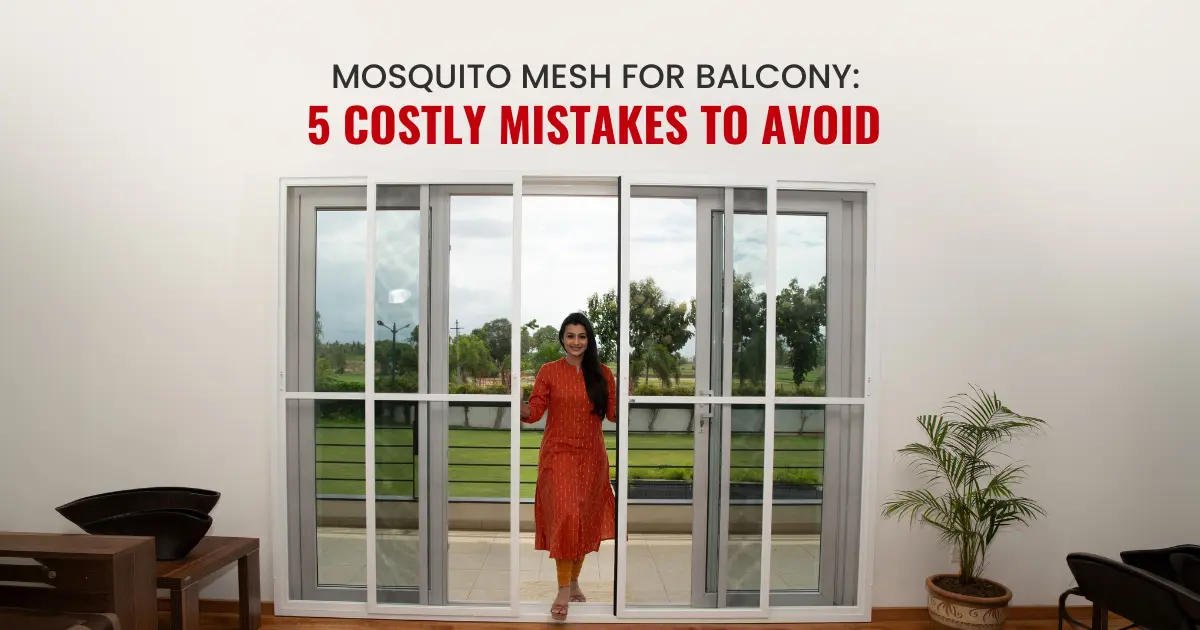
A well-designed Mosquito Mesh for Balcony can transform your home. It allows you to enjoy fresh air, natural light, and a peaceful outdoor space without worrying about mosquitoes and other insects. Yet many homeowners make simple mistakes during selection and installation. These errors often lead to wasted money, poor durability, and ongoing discomfort.
In Indian cities, balconies are more than decorative spaces. They are morning tea spots, mini gardens, work-from-home corners, and evening relaxation areas. But without proper protection, they can quickly become breeding grounds for insects.
Choosing the right mosquito net for balcony areas is not just about comfort; it is about health, safety, and long-term value. In this guide, we explain why balcony mesh matters and highlight five costly mistakes to avoid.
Why Mosquito Mesh for Balcony Matters?
Rising Mosquito-Borne Diseases
India continues to face serious mosquito-borne diseases such as dengue, malaria, and chikungunya. Urban areas, especially during the monsoon, become high-risk zones due to stagnant water and humidity. Even high-rise apartments are not immune.
High-quality mosquito mesh for the balcony acts as a physical barrier. It blocks mosquitoes from entering your living space while allowing ventilation. This simple preventive step can reduce exposure to harmful bites. Families with children and elderly members benefit the most, as they are more vulnerable to infections.
Rather than relying only on chemical repellents or coils, installing balcony mesh offers a safer, long-term solution. It reduces dependency on sprays that may affect indoor air quality.
Enhancing Outdoor Living
Balconies are valuable extensions of your home. However, constant insect disturbance often limits their use. Without protection, many families avoid sitting outside in the evening.
A properly installed mosquito net for balcony use lets you enjoy the space freely. You can grow plants, set up seating, or create a small play area without worry. It also improves airflow, reducing the need for excessive air conditioning.
In short, balcony mesh improves comfort, usability, and overall quality of life.
What Makes a Good Mosquito Net for a Balcony?
Durability and Weather Resistance
Balcony installations are exposed to direct sunlight, rain, dust, and wind. Therefore, durability is critical. A high-quality Mosquito Mesh for Balcony should resist corrosion, fading, and tearing.
Look for UV-resistant materials that can withstand strong sunlight. Powder-coated aluminium frames are preferred in Indian climates because they do not rust easily. Stainless steel mesh is also known for its strength and longevity.
Cheap plastic-based mesh may deteriorate quickly. Within months, it may sag or develop holes. Investing in durable materials ensures your balcony remains protected for years.
Easy Installation Tips
Ease of installation depends on the design and structure of your balcony. Sliding mesh systems, fixed frames, or retractable options are commonly available. Professional guidance ensures better fitting and finish. A well-installed mesh should feel seamless and secure.
Before installation:
- Check for proper frame alignment.
- Ensure no gaps remain at edges.
- Confirm smooth sliding if using track systems.
- Inspect locking mechanisms.
Mistake 1 – Ignoring Material Quality
Choosing the wrong material is often the biggest and most expensive error homeowners make. At first glance, most mesh options may look similar. However, their performance, lifespan, and strength can differ significantly.
Cheap vs Premium Materials
Cheap mesh products are usually made from low-grade plastic or thin fibre. They may look fine when new, but they weaken quickly under Indian weather conditions. High heat, humidity, and heavy rains can cause sagging, tearing, or discolouration.
Premium materials such as fibreglass, stainless steel mesh, or aluminium frames with powder coating offer much greater durability. They are resistant to corrosion, UV rays, and daily wear. A high-quality Mosquito Mesh for Balcony should feel firm but flexible. It should not bend excessively or appear fragile when lightly pressed.
Another difference lies in airflow and visibility. Premium mesh maintains good ventilation while effectively blocking even small insects. Cheaper variants may either restrict airflow or have larger gaps that allow tiny insects to pass through.
In short, material quality determines both performance and lifespan.
Long-Term Cost Implications
Many homeowners focus only on the initial price. A cheaper option may save a few thousand rupees upfront, but it often results in higher long-term expenses.
Low-quality mesh may require frequent patchwork or full replacement within a short period. Reinstalling frames, replacing torn sections, or fixing loose fittings adds labour costs each time. These repeated expenses quickly exceed the cost of investing in a better product initially.
On the other hand, a premium mosquito net for balcony use can last many years with minimal maintenance. It provides better protection, reduces stress, and eliminates the need for repeated installation work.
When considering cost, think beyond today’s budget. Think about five years from now.
How to Spot Low-Quality Mesh?
Taking ten extra minutes to inspect these details can prevent years of frustration. Spotting low-quality mesh becomes easier when you know what to look for:
- Check the thickness: Very thin mesh strands break easily when stretched.
- Inspect the weave: Uneven gaps or loose weaving indicate poor manufacturing.
- Examine colour consistency: Patchy colour suggests weak UV treatment.
- Look at the frame finishing: Rough edges or poorly coated frames can rust quickly.
- Test strength gently: Press the mesh lightly. If it stretches too much, it may not hold its shape over time.
- Ask about warranty: Reliable suppliers provide written warranties on materials and installation.
Mistake 2 – Wrong Size Measurements
Measurement errors are more common than people think. Even a small gap of a few millimetres can compromise the effectiveness of your Mosquito Mesh for Balcony.
Measuring Your Balcony Correctly
Balconies are rarely perfectly straight or symmetrical. Walls may have slight curves. Corners may not form exact 90-degree angles. It makes accurate measurement essential.
It is also important to measure from finished surfaces rather than rough edges. A professional installer usually checks structural alignment before suggesting the final size. Precision ensures tight sealing and smooth operation.
When measuring:
- Measure width at the top, middle, and bottom.
- Measure height at both ends and the centre.
- Check for uneven flooring or sloping surfaces.
- Account for grills, railings, or pipes that may interfere.
- Leave room for sliding tracks if installing a sliding system.
Consequences of Poor Fit
Incorrect measurements can lead to visible gaps, loose-fitting, or difficulty in sliding panels. Even tiny openings allow mosquitoes and small insects to enter.
Poor fit also causes mechanical issues. Frames may bend under pressure, and sliding systems may jam. Over time, this creates unnecessary strain on hinges and tracks.
Wind pressure can further loosen poorly fitted mesh. In high-rise apartments, this may even pose safety concerns.
A properly measured mosquito net for balcony use should sit snugly within the frame, without wobbling or leaving spaces.
Mistake 3 – Skipping Professional Installation
Installation is not just about attaching a frame. It requires technical precision, structural understanding, and safe handling.
DIY vs Hiring Experts
DIY installation might seem cost-effective, but it often lacks professional finishing. Balcony mesh systems must be securely anchored, properly aligned, and sealed at the edges. Installing experts is the right decision for long-term reliability. Professional installation also maintains warranty validity. This adds an extra layer of security.
RKEcran is known as one of the best providers for installing mosquito mesh systems. Their experienced installers assess the balcony structure, recommend suitable materials, and ensure flawless fitting.
We ensure:
- Accurate drilling without damaging walls
- Proper frame alignment
- Smooth sliding or locking systems
- Tight sealing to prevent insect entry
- Neat and clean finishing
Hidden Risks of Self-Installation
Even minor errors reduce the effectiveness of your Mosquito Mesh for Balcony. What looks acceptable initially may start showing issues within months. Expert installation ensures safety, performance, and durability. DIY installation can lead to hidden risks:
- Incorrect drilling may damage waterproofing layers.
- Improper anchoring can cause frames to loosen.
- Weak sealing leaves small gaps.
- Poor alignment affects sliding functionality.
- Working on high-rise balconies can be dangerous without safety measures.
Mistake 4 – Overlooking Maintenance Needs
Many homeowners assume balcony mesh requires no upkeep. While it is low maintenance, it is not maintenance-free.
Cleaning Your Mosquito Mesh
Over time, dust, pollution, pollen, and cobwebs accumulate on the mesh surface. In Indian cities, air pollution can clog the pores of mesh filters, reducing airflow. Regular cleaning keeps the mesh effective and visually appealing. Cleaning once every few months keeps your mosquito net for balcony use in good condition.
Maintenance tips:
- Use a soft brush to remove surface dust.
- Vacuum gently for deeper cleaning.
- Wash occasionally with a mild soap solution.
- Avoid harsh detergents or pressure washing.
- Dry thoroughly to prevent moisture retention.
Repair vs Replacement Costs
Small tears can often be repaired using patch kits if addressed early. However, ignoring minor damage can cause it to expand.
Frame corrosion, loose fittings, or sagging mesh may eventually require full replacement. Replacement is more expensive than timely repairs.
Routine inspection every six months helps detect issues early. Proper care extends the lifespan of your Mosquito Mesh for Balcony significantly.
Mistake 5 – Forgetting Aesthetic Appeal
Functionality should never come at the cost of design.
Matching Your Balcony Style
Balconies contribute to your home’s overall appearance. A poorly chosen mesh system may look bulky or mismatched.
Modern mosquito mesh systems come in various frame colours, including white, brown, black, and custom shades. Powder-coated finishes improve durability and appearance.
Choose a design that blends with your balcony railings and window frames. Minimalistic systems with slim frames offer a clean look. Retractable mesh options are also popular for maintaining open views.
A well-designed Mosquito Mesh for Balcony enhances the overall ambience rather than disrupting it.
Final Thought
Each of these mistakes may seem small at first. However, together they can reduce performance, increase costs, and compromise safety. Paying attention to material quality, measurements, installation, maintenance, and aesthetics ensures you get maximum value from your investment.
When chosen wisely and installed professionally, your mosquito net for the balcony becomes a long-term solution that protects your family while enhancing comfort and style.