
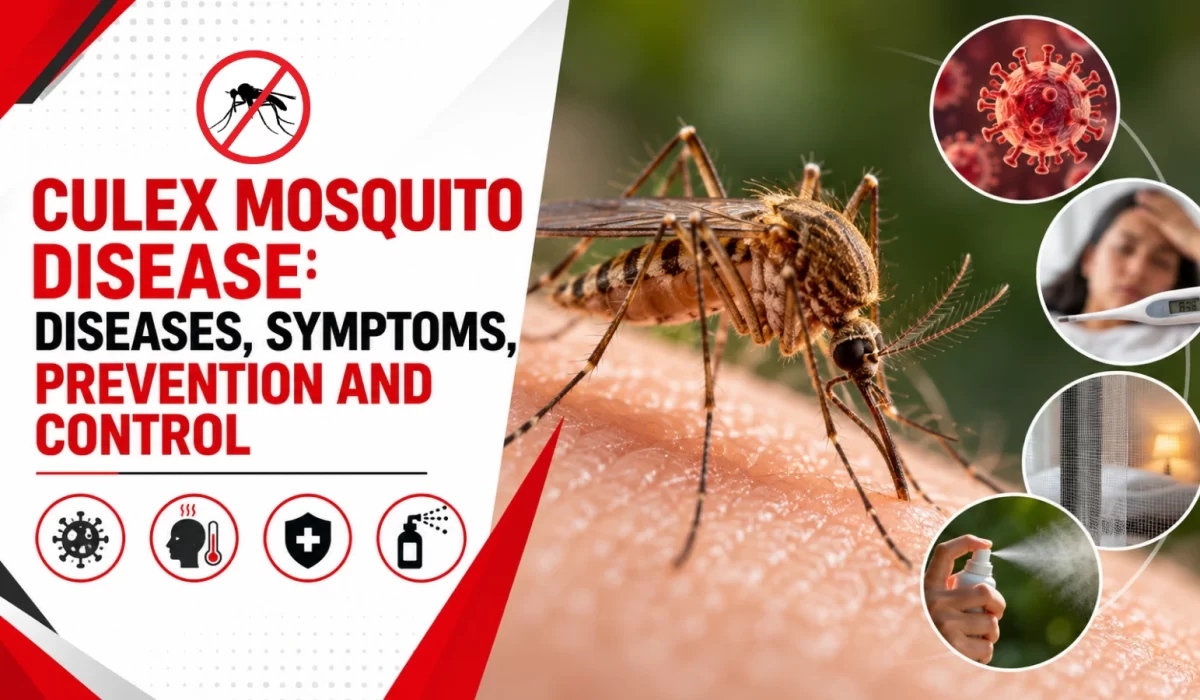
Mosquitoes are more than a nuisance. Some species can carry viruses and parasites that cause serious illnesses in humans. Culex mosquitoes are one such group. They are found in many parts of the world and are often associated with stagnant or slow-moving water.
A Culex mosquito disease can be caused by a virus or parasite transmitted through the bite of an infected female mosquito. Some important diseases linked to Culex mosquitoes include West Nile virus, Japanese encephalitis, lymphatic filariasis and St. Louis encephalitis.
However, not every Culex mosquito carries disease, and different Culex species transmit different infections.
Understanding where Culex mosquitoes breed, when they bite and how they spread disease can help you take simple steps to reduce mosquito exposure at home.
What Are Culex Mosquitoes?
Culex is a large group, or genus, of mosquitoes. They can live around homes, gardens, drains, ponds and other areas where water collects.
Female Culex mosquitoes need a blood meal to develop their eggs, while both male and female mosquitoes feed mainly on plant sugars.
Female Culex mosquitoes commonly lay eggs on the surface of standing water. The eggs hatch into larvae, which live in water before developing into pupae and then adult mosquitoes. Water that remains undisturbed for several days can therefore become a suitable breeding site.
Culex mosquitoes are also known for being active mainly during the evening and night. This means people may be exposed to bites while relaxing outdoors, sleeping or moving around their homes after sunset.
Major Diseases Spread by Culex Mosquitoes
Several important infections are associated with Culex mosquitoes. The diseases caused by Culex mosquitoes can vary depending on the mosquito species, location and pathogen involved.
West Nile Virus
West Nile virus is a viral infection spread mainly through the bite of an infected mosquito. Culex mosquitoes can become infected after feeding on infected birds and may then transmit the virus when they bite other animals or people.
Many people infected with West Nile virus have no symptoms. Others may develop fever, headache, body aches, vomiting or a skin rash. In a small number of cases, the infection can affect the nervous system and lead to serious illness.
Japanese Encephalitis
Japanese encephalitis is another important Culex mosquito disease, particularly in parts of Asia and the Western Pacific. It is mainly transmitted to people through the bite of infected Culex mosquitoes.
The virus is maintained in nature through mosquitoes and animals such as pigs and wading birds. Humans are usually considered dead-end hosts, meaning they do not normally pass the virus back to mosquitoes. Severe cases can cause inflammation of the brain and may lead to neurological complications.
Lymphatic Filariasis
Lymphatic filariasis is different from viral mosquito-borne diseases because microscopic parasitic worms cause it. Several mosquito genera can transmit it, including Culex.
The parasite can damage the lymphatic system over time. Many infected people may not have obvious symptoms at first, but long-term infection can result in lymphoedema, swelling and other complications. The condition is also commonly known as elephantiasis.
St. Louis Encephalitis
St. Louis encephalitis is a viral disease spread by infected mosquitoes. Culex mosquitoes are important vectors for this virus in areas where it occurs.
Most infections may cause mild or no symptoms, but some people can develop inflammation of the brain or other serious neurological illness. Older adults are among those who may be at greater risk of severe disease.
Key Characteristics of Culex Mosquitoes
Knowing the basic habits of Culex mosquitoes can make mosquito control easier. Their behaviour and breeding preferences give homeowners useful clues about where to look for potential breeding sites.
They Are Mainly Active at Night
Culex mosquitoes are generally most active from evening through the night. They may enter homes or remain around outdoor areas where people spend time.
Using screens on windows and doors can reduce the chances of mosquitoes entering living spaces. Personal protection, such as wearing suitable clothing and using an appropriate mosquito repellent, can also help reduce bites.
They Prefer Standing or Slow-Moving Water
Culex mosquitoes often breed in standing water. Common sites can include stagnant drains, water storage containers, ponds, discarded items, blocked gutters and areas where rainwater collects.
Even a small amount of water can become a breeding site if it remains undisturbed. Regularly checking your surroundings is therefore an important part of Culex mosquito prevention.
They Can Breed Around Urban Homes
Culex mosquitoes are not limited to rural areas. Some species can thrive in urban and semi-urban environments, particularly where suitable water and organic waste are present.
Poorly maintained drains, wastewater areas and containers holding stagnant water can provide favourable breeding conditions. Keeping these areas clean and preventing water from standing for long periods can help reduce mosquito numbers.
How Does a Culex Mosquito Spread Disease?
A mosquito does not automatically spread disease simply because it belongs to the Culex group. Transmission depends on whether the mosquito species is capable of carrying a particular pathogen and whether it has become infected.
The cycle usually starts when a female mosquito feeds on an infected host. The pathogen can then develop or multiply inside the mosquito, depending on the disease. When the infected mosquito bites another suitable host, the pathogen can be transmitted.
This is why reducing mosquito bites and controlling breeding sites are both important. Removing mosquitoes from the environment can help break the transmission cycle for diseases that depend on mosquito vectors.
Culex Mosquito Bite: What Should You Do?
A Culex mosquito bite may look like a small, itchy or swollen area on the skin. A bite by itself does not mean that a person has contracted a mosquito-borne disease.
Avoid scratching the affected area, as repeated scratching can irritate the skin and may increase the risk of secondary infection. If you develop unusual or persistent symptoms such as high fever, severe headache, confusion, weakness, vomiting or other concerning symptoms after mosquito exposure, seek medical advice.
It is also important to remember that symptoms vary between diseases. A healthcare professional can decide whether testing or further assessment is needed.
How to Prevent and Control Culex Mosquito Diseases?
Preventing bites is one of the simplest ways to reduce exposure to mosquito-borne infections. At the same time, controlling breeding sites helps reduce the number of mosquitoes around your home.
Remove Standing Water
Check your home and surrounding areas regularly for water that has collected in containers, pots, trays, buckets, tyres and other objects. Empty, clean or cover these items where possible.
Pay particular attention after rainfall, as even small collections of water can provide mosquitoes with a place to lay eggs.
Keep Drains and Water Areas Clean
Blocked or poorly maintained drains can hold stagnant water and organic material. Regular cleaning can help reduce suitable breeding conditions.
Water tanks, storage containers and other water-holding structures should also be properly covered whenever possible.
Use Mosquito Screens
Keeping mosquitoes outside is another useful layer of protection. Properly fitted mosquito screens for windows and doors can help prevent mosquitoes from entering bedrooms and other living areas while allowing air to circulate.
Screens are especially useful in areas where mosquitoes are active during the evening and night.
Protect Yourself From Bites
Wear long-sleeved clothing when practical, particularly during periods of high mosquito activity. Appropriate mosquito repellents can also provide additional protection.
If you are travelling to an area where a particular mosquito-borne disease is common, follow local public health advice and ask a healthcare professional about recommended precautions.
Final Thoughts
A Culex mosquito disease can range from a mild infection to a serious illness affecting the nervous system or lymphatic system. West Nile virus, Japanese encephalitis, lymphatic filariasis and St. Louis encephalitis are among the important diseases associated with Culex mosquitoes.
The good news is that simple mosquito control habits can make a difference. Remove stagnant water, maintain drains, cover water containers, use suitable repellents and install effective screens on doors and windows.
Mosquito prevention is most effective when it becomes a regular part of household maintenance rather than something done only after mosquito numbers increase.
By reducing breeding sites and preventing mosquitoes from entering living spaces, you can reduce everyday exposure to these disease-carrying insects.

Sivashankar Maruthachalam
Sivashankar Maruthachalam is the Founder of RK Ecran Private Limited, a Coimbatore-based manufacturer of premium mosquito net doors and windows. Since establishing the company in 2006, he has led RK Ecran from a pioneering startup to a market leader across southern India - with operations spanning Tamil Nadu, Kerala, and Karnataka.. Under his vision and leadership, RK Ecran introduced magnetic swing mosquito doors to the Indian market at a time when cumbersome Velcro-based nets were the only available alternative - a move that redefined the category. Today, the brand has served over 1,00,000 Indian homes, operates a 30,000 sq. ft. state-of-the-art manufacturing facility, and employs a team of 110 - making RK Ecran the first mosquito net brand in India to receive CE Certification from the European Union. Sivashankar's commitment to consistent quality, research-driven innovation, and customer satisfaction has shaped every aspect of the company — from its ISO-compliant manufacturing processes to its growing dealer network across the country.
