
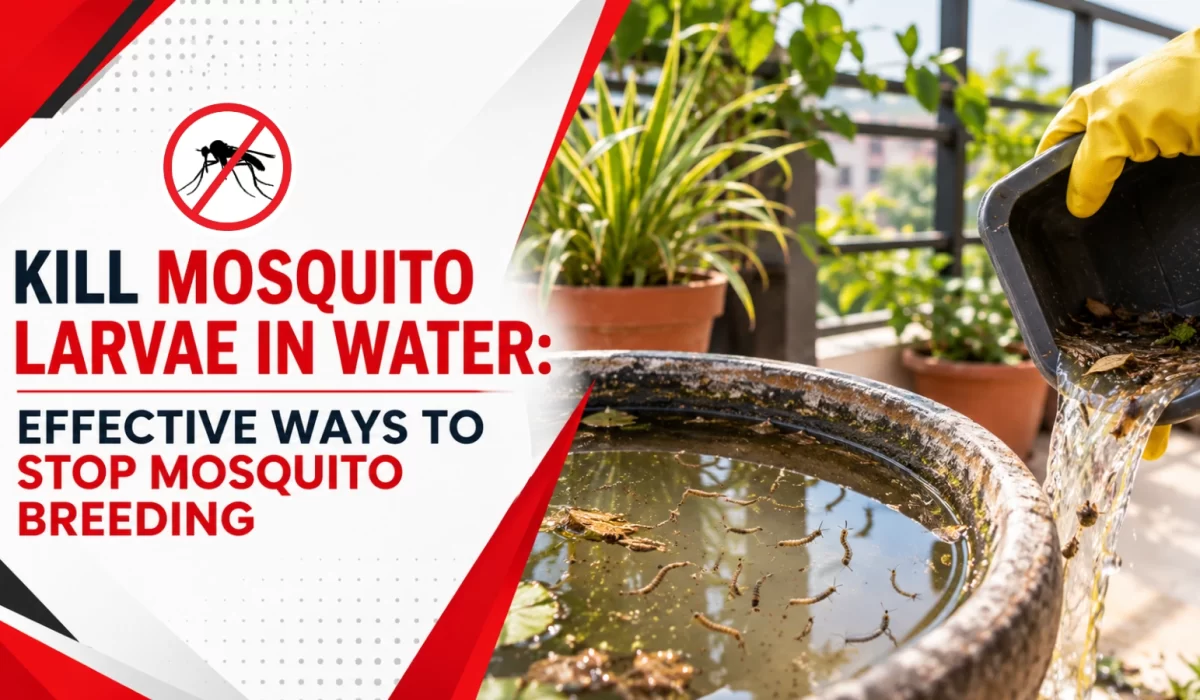
Mosquitoes do not need much water to breed. A bucket left outside, a flowerpot saucer, a blocked drain, or even a small puddle can become a breeding site. When mosquitoes find still water, they lay their eggs on or near the water surface. These eggs then hatch into mosquito larvae.
If you want to kill mosquito larvae in water, it is important to act before the larvae develop into adult mosquitoes. Removing standing water is often the simplest step. For water that cannot be drained, products such as Bacillus thuringiensis israelensis (Bti) can help control mosquito larvae.
Understanding where mosquito larvae grow and how to deal with them can make mosquito control around your home much easier.
Where Do Mosquito Larvae Grow?
Mosquito larvae usually develop in stagnant or slow-moving water. They do not need a pond or large water body. Small amounts of water can be enough for mosquitoes to complete part of their life cycle.
Common mosquito breeding sites include buckets, plant pots, old tyres, drains, water tanks, discarded containers, and rainwater collected outdoors. Roof gutters and trays under air-conditioning units can also hold water for several days.
Regularly checking these areas is one of the most effective ways to reduce mosquito breeding around your home.
Flowerpots and Plant Saucers
Plant saucers can collect water after watering plants or rain. Since these containers are often left undisturbed, they can become suitable places for mosquito larvae.
Empty the water regularly and clean the saucers to remove any eggs or organic material. If possible, avoid leaving standing water around plants for several days.
Buckets, Tubs and Containers
Open buckets, tubs and other containers can collect rainwater quickly. Even a small amount of stagnant water may become a breeding site.
Keep containers covered when they are not in use. If you find mosquito larvae in a container, empty the water and scrub the inside before using it again.
Drains and Gutters
Blocked drains and gutters can trap rainwater and create hidden mosquito breeding areas. Leaves, dirt, and other debris can stop water from flowing freely.
Clean gutters and outdoor drains regularly, especially during the rainy season. Good drainage helps prevent water from remaining in one place for long periods.
How to Kill Mosquito Larvae in Water?
The best method depends on the type and amount of water. If the water can be removed, draining it is usually the first choice. If the water cannot be emptied, a suitable larvicide can help control mosquito larvae.
For larger or permanent water bodies, use products that are specifically designed and labelled for mosquito larval control.
Use Bti to Control Mosquito Larvae
Bti, or Bacillus thuringiensis israelensis, is a biological larvicide used to control mosquito larvae in water. It contains naturally occurring bacteria that produce toxins which affect the larvae when they feed on the treated material.
Bti is available in forms such as briquettes, dunks, and granules. These products can be useful in areas such as water-holding containers, ornamental ponds, and other sites where water cannot easily be removed.
Always follow the product label for the correct application method and dosage. Do not assume that one product is suitable for every type of water.
Remove the Water Whenever Possible
If you find mosquito larvae in a bucket, tray, tyre or small container, emptying the water is often the quickest solution. However, simply pouring out the water may not remove mosquito eggs attached to the container.
After emptying it, scrub the sides and bottom of the container. Then rinse it and store it upside down or cover it so that rain cannot collect inside.
This simple habit can help break the mosquito breeding cycle.
What Happens to Mosquito Larvae in Standing Water?
Mosquitoes have four main stages in their life cycle: egg, larva, pupa, and adult. The larval stage takes place in water.
Mosquito larvae often come to the surface to breathe. They move through the water and feed on small organic particles and microorganisms. As they grow, they shed their skin several times before becoming pupae.
The pupa is the next stage. It remains in the water while the adult mosquito develops. Once development is complete, the adult mosquito emerges and leaves the water.
This is why killing mosquito larvae in water can be an important part of mosquito control. It targets mosquitoes before they become adults capable of biting and reproducing.
Can Vegetable Oil or Olive Oil Kill Mosquito Larvae?
Oil has sometimes been suggested as a home method for dealing with mosquito larvae in small amounts of stagnant water. The idea is that a layer of oil can interfere with the larvae’s ability to reach the water surface for air.
However, this is not a suitable solution for every water source. Adding oil to water can create other environmental and maintenance problems. It should not be used in ponds, birdbaths, or water containing fish and other aquatic life.
For reliable mosquito control, source reduction or a properly labelled larvicide is generally a more appropriate approach.
Can Dish Soap Kill Mosquito Larvae?
Dish soap is another home remedy sometimes suggested for mosquito larvae. Soap can change the surface properties of water and may interfere with mosquito larvae.
However, household dishwashing products are not designed as mosquito larvicides. Adding them to outdoor water can also affect other organisms and contaminate areas where animals or plants may come into contact with the water.
Rather than relying on dish soap, remove stagnant water whenever possible. For water that must remain in place, use a mosquito-control product according to its label.
How to Prevent Mosquito Larvae in Standing Water?
Preventing mosquito breeding is easier than dealing with a large number of larvae later. A few regular checks around your home can make a noticeable difference.
- Empty Unused Containers: Check your balcony, terrace, garden, and outdoor areas for anything that can collect rainwater. Empty buckets, cans, bottles, trays, and other containers regularly. Turn unused containers upside down and store them under cover. This reduces the number of places where mosquitoes can lay eggs.
- Keep Water Tanks Covered: Water storage tanks should have tight-fitting covers. Small gaps can allow mosquitoes to enter and lay eggs. Check the cover regularly for damage and make sure it sits securely. If mosquito larvae are found in a water storage system, seek appropriate professional advice before treating water intended for household use.
- Clean Gutters and Drains: Leaves and debris can prevent rainwater from draining properly. Clean gutters and drains regularly to stop water from collecting. This is especially important before and during the monsoon season when rainfall can create many temporary mosquito breeding sites around homes.
- Check Your Garden After Rain: Walk around your garden after rainfall and look for small pools of water. Check plant pots, trays, toys, tyres, tarpaulins, and other objects that may collect water. Even if the amount of water looks insignificant, it can provide a breeding site for mosquitoes.
How Often Should You Check for Mosquito Breeding?
A weekly inspection is a useful routine for most homes. Check outdoor areas after rainfall and look for water that has remained undisturbed.
Pay special attention to places that are easy to overlook, such as plant saucers, roof gutters, drain openings, and containers stored behind furniture or in corners.
Regular checks make it easier to find and remove mosquito breeding sites before they produce adult mosquitoes.
Take Action Before Mosquitoes Become Adults
Knowing how to kill mosquito larvae in water is an important part of keeping mosquito numbers under control. The first step is always to identify where stagnant water is collecting.
If possible, empty and clean the container. For water that cannot be removed, a suitable Bti product or another properly labelled larvicide can provide targeted control.
Avoid relying on household remedies such as oil or dish soap, particularly in ponds or water containing fish and other aquatic life. Instead, choose methods that are suitable for the specific water source.
Most importantly, make mosquito checks part of your regular home maintenance routine. Removing standing water, cleaning drains and gutters, covering stored water, and protecting indoor entry points can work together to reduce mosquito breeding and help create a more comfortable, mosquito-free home.

Sivashankar Maruthachalam
Sivashankar Maruthachalam is the Founder of RK Ecran Private Limited, a Coimbatore-based manufacturer of premium mosquito net doors and windows. Since establishing the company in 2006, he has led RK Ecran from a pioneering startup to a market leader across southern India - with operations spanning Tamil Nadu, Kerala, and Karnataka.. Under his vision and leadership, RK Ecran introduced magnetic swing mosquito doors to the Indian market at a time when cumbersome Velcro-based nets were the only available alternative - a move that redefined the category. Today, the brand has served over 1,00,000 Indian homes, operates a 30,000 sq. ft. state-of-the-art manufacturing facility, and employs a team of 110 - making RK Ecran the first mosquito net brand in India to receive CE Certification from the European Union. Sivashankar's commitment to consistent quality, research-driven innovation, and customer satisfaction has shaped every aspect of the company — from its ISO-compliant manufacturing processes to its growing dealer network across the country.
